Lock and Tech USA installs and repairs access control – fobs, cards, phone entry, keypads and fingerprint readers – for apartment buildings, co-ops, offices and storefronts across New York's five boroughs. We walk every door for free, put the price in writing for each door, and your building keeps the admin login. Our own technicians come from Brooklyn – on weekdays, usually on site in 20 to 40 minutes, up to an hour in heavy traffic.
Book a Free Door Walkthrough
We'll call back during business hours to set up your walkthrough.
Or call us directly: (718) 758-4959 – open Mon–Fri, 8 AM–6 PM
About half of New Yorkers live in buildings of 20 or more apartments, and most homes here are rented. One address means many doors and steady move-outs, so we plan the building first and pick the reader after.
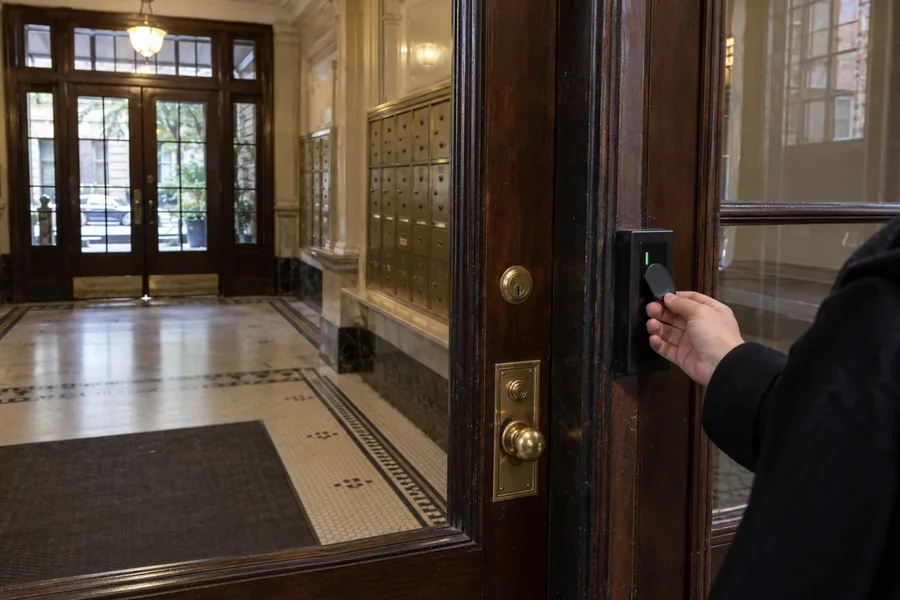
Fobs or phone entry on the front door, lobby, package room, roof, laundry and garage, each door on its own rule. For a super or managing agent, a move-out becomes a revoked fob in the dashboard instead of a new lock.
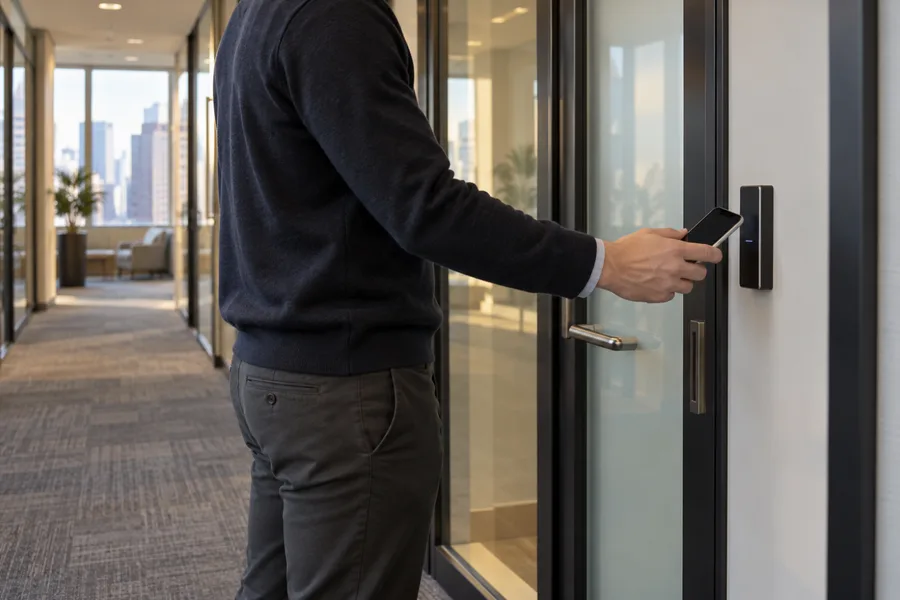
For offices with new hires every month – cards or phones for staff, a separate group for the server or records room, contractor badges that expire on their own, and elevator floors set per credential. Cut someone off on Friday without touching a lock.
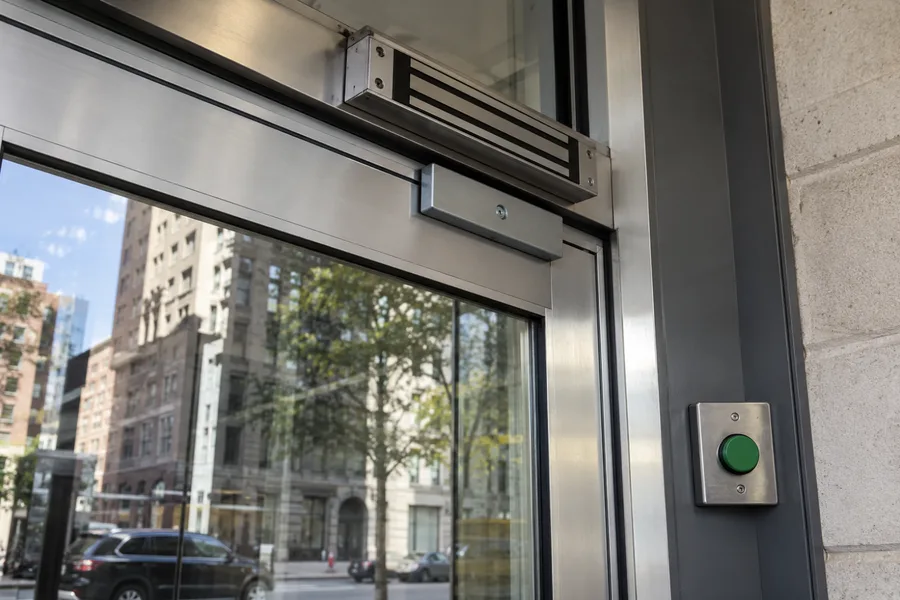
For shops, restaurants and lobbies, a glass door takes a maglock – an electromagnet at the top – with a request-to-exit sensor and push-to-exit button, tied to the fire alarm where there is one. Wood and metal frames get an electric strike, so your lever stays.
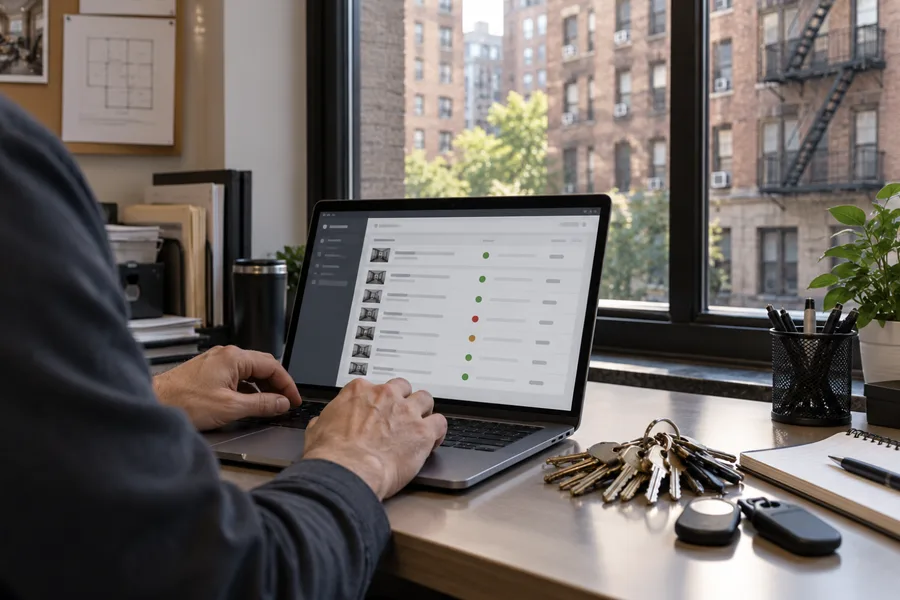
For management companies and owners with more than one address – cloud platforms such as Brivo and Paxton put every building on one account. Add a fob once, choose the doors it opens, and check any building's entries from the same login.
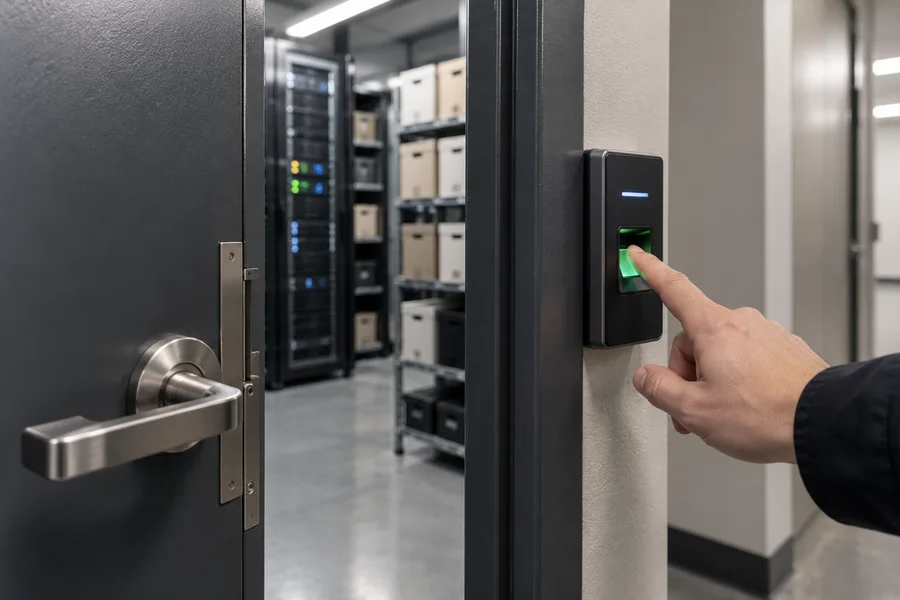
For doors where a credential must never be shared – records, medication, server rooms. A fingerprint can't be lent the way a fob can. Scanning customers in a store or restaurant comes with city signage rules. A reader on a staff door is a different case.
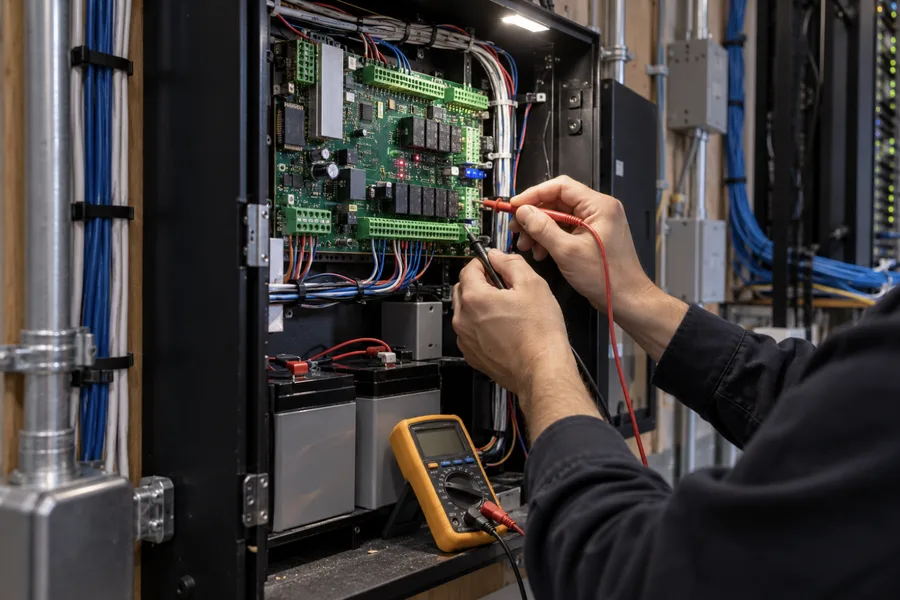
Readers that blink but don't release, dead keypads, maglocks that won't let go, an installer who stopped answering. We repair every make, including discontinued panels. Most faults are fixed on the first visit because common parts ride in the van.
About four in ten New York homes are in buildings put up before 1940. Plaster walls, masonry shafts and old risers decide where a cable can run. That's why, in a prewar building, the wiring path is usually the biggest swing in the price, more than the reader. Our walkthrough looks for reusable conduit and an existing closet for the controller before anyone quotes. Management signs off before anything is drilled, and in a co-op so does the board. The door-by-door plan is what they review.
Then there are the people behind those doors. About two in three households here rent, so key lists go stale with every move-out. If your building uses smart access, a city law protecting tenant data asks for written or in-app consent, a privacy policy, deleting entry data within 90 days, and never requiring a fob to open a tenant's own apartment door. We set up the permission list so the building can follow it.
None of this means closing the building. We work one door at a time while the rest stays open, and noisy cable pulls can go after hours.
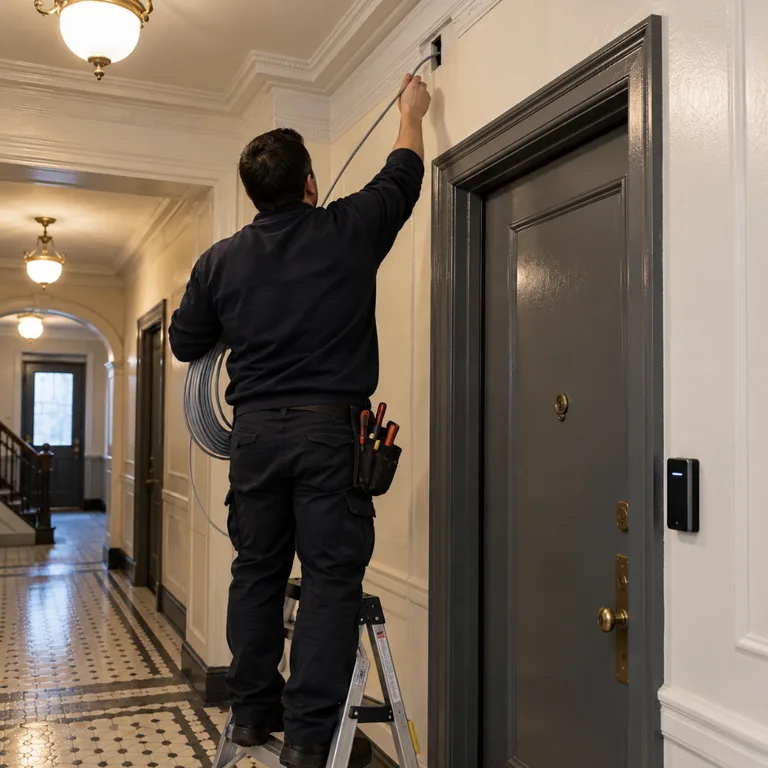
A standard door usually takes four to eight hours of labor, so a small job rarely ties up a building for long.
The technician who walks your doors checks each frame and existing lock, where power can come from and the path a cable can take. No obligation.
Each door gets its own line, with parts and labor shown separately. Nothing starts until you sign.
We pull and test the cable, mount the controller, then fit readers and locks. Each opening is finished before we move on to the next.
We build the user list, groups and schedules and test every door locked and unlocked. We show whoever runs the system how to add a user, revoke a credential and pull a door log, then hand over the administrator account.
Quotes across New York look alike on paper. The differences show up after the install.
Our Google rating is 4.9. Here are four clients, in their own words. Read all our Google reviews
“This team is the best in the business. We installed a commercial key less entry system and they made sure the installation was flawless. They have the best communication of any business we have worked with.”
“I called Lock and Tech after another company left me hanging on a camera and access control installation for my commercial property. From the first call, Monica had me scheduled for the next day. Gabriel came out, assessed our whole setup, and gave me a clear, honest quote.”
“Hired this company to move our intercom system from inside to outside and also to install a new magnetic door lock on the outside glass door. … They even helped us set up the AxTrax software for free to help manage access for our key-fob system.”
“They are always very responsive and professional. I have been working with them for 7-8 years across multiple locations and have no complaints”
What you see at the door rarely names the part that failed. A green beep on a locked door can be the lock, the relay or the strike's power supply, and each of those is a different fix. We test the chain from reader to controller to lock before replacing anything. The invoice lists what we tested and what we swapped. We carry the common parts, so one trip usually does it, on any make.
| What you see | What's usually behind it | What we do |
|---|---|---|
| Reader beeps green, but the door stays locked | The lock, the relay that switches it, or power to the strike | Measure voltage at the lock, then trace back to the relay and the supply |
| One person's fob works, another's doesn't | A permission or time schedule in the software, not the hardware | Check that user's group and schedule and correct it in the dashboard |
| Keypad is dark, with no tone | A failed power supply or a broken conductor in the cable | Test the supply output, then the cable run to the keypad |
| Maglock keeps holding after it should release | A stuck relay, a faulty request-to-exit device or a controller output | Test each one in turn and replace the part that fails |
| Door works in the morning and fails after lunch | Voltage drop, a loose connection, or the reader losing contact with the controller | Load-test the supply and redo the connections |
| Door won't lock after hours | The schedule, the door position switch (the sensor that knows the door is shut) or the lock | Check the schedule first, then the switch, then the lock |
| Fingerprint reader rejects people it used to accept | A dirty sensor, enrollments that need redoing, or settings that have drifted | Clean the sensor, re-enroll users, reset the matching settings |
Several doors on an old panel can start failing together. Then the question shifts from which part to whether the panel should stay.
Here's what a door in a New York building usually comes to with us.
| What | What it usually costs |
|---|---|
| Walkthrough of every door | Free, no obligation |
| Standalone keypad door | From about $500 |
| Networked door with cards, fobs or phones on a controller | Usually $1,500–$4,500 installed |
| Fingerprint or face reader door | Typically $2,000–$8,000 |
| Glass shop door, elevator or turnstile | Usually $6,000 and up |
| Cloud software | Typically $10–$30 per door, per month |
A few things push a door up or down the range:
Here are two examples. A two-door office with the entrance plus a server room usually lands around $3,000–$9,000, with the cloud fee on top if you choose one. A walk-up with its front door, roof, package room and basement on fobs typically comes to $6,000–$18,000.
Each door is billed as its own labor and materials lines. Larger jobs take a partial deposit up front, and the balance is due at completion. The exact price comes in a written estimate after the walkthrough, before any work starts.
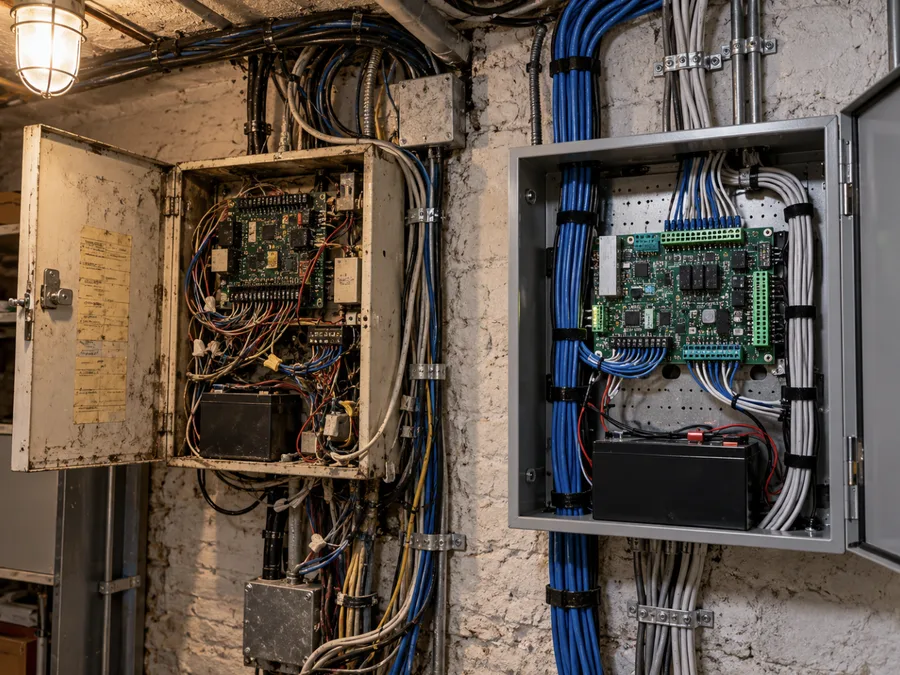
A single failed reader, a burned relay, a broken cable run or a corrupted schedule is a repair, no matter how old the panel is. Replacement starts to make sense in a few cases:
There's a middle path, too. New readers can go on the controller you already have, where the two are compatible. If parts have to be ordered, we leave the door on a mechanical lock or in a fixed state until they arrive. Repair work carries no warranty. New installations carry a warranty on parts and labor.
Call (718) 758-4959 weekdays, 8 AM–6 PM. A technician is usually there in 20 to 40 minutes, up to an hour in heavy traffic.
Someone can't get out. Send them to another exit. If anyone is trapped or the fire alarm is sounding, call 911 first, then us.
A door stuck open after closing. Keep it watched, or use the mechanical lock if the door has one. Don't cut power or pull wires yourself. Call us.
Exits stay exits. Never block, chain or bypass a controlled exit door or its fire-alarm release, even for one night.
When a part has to be ordered, we leave that door secured until the new one goes in. People can still get out the whole time.
Call Now – (718) 758-4959We drive out to every borough of New York from our location on McDonald Avenue in Brooklyn. In Manhattan that includes Midtown, Chelsea, Harlem and the Financial District. In Brooklyn it includes Park Slope, Bay Ridge and Bushwick, and in Queens it includes Astoria, Long Island City and Jamaica. We also cover St. George on Staten Island and Pelham Bay in the Bronx. A manager with several buildings keeps them all under a single account. We go beyond the city when a client's buildings are there.
These are short answers. The walkthrough fills in the details for your building.
Most networked doors on a controller come in between $1,500 and $4,500 installed. A keypad door starts near $500, and glass storefronts or elevators start around $6,000. Door count, the frame, the cable route and any cloud fee move the number. Once we've seen your doors, the exact figure arrives as a written estimate, and nothing gets installed until you approve it.
It depends on turnover and on how much the door log matters. Cards and fobs suit a steady headcount. Phone credentials over Bluetooth or NFC fit buildings with frequent changes or several sites, because there's nothing to hand back. A PIN is enough for a low-sensitivity room. Fingerprint or face readers go on doors where the log has to show exactly who walked in.
It means residents consent in writing or in the app before their data goes in, and the building gives them a privacy policy. The building collects only what's needed and erases authentication data no later than 90 days. It also can't make a tenant use the fob to get into their own apartment. We set up user records and data retention with those rules in mind. This isn't legal advice, and your building's attorney has the final word.
Most standard installations don't need a Buildings Department permit. New conduit or structural work can, and we tell you which applies once we've seen the doors. Approval is a separate step. Running new cable through plaster and conduit needs management sign-off. In a co-op, the board approves before anyone drills, and our written scope gives them what they need to decide.
Maglocks release, so people can always get out. Electric strikes can be set fail-secure, which keeps them locked from outside while the inside lever still opens the door. Battery backup at the controller covers short outages. The controller also keeps the credential list on board, so it doesn't need an internet connection to decide who gets in.
Call (718) 758-4959 or send the form with your door count and building type. We'll come out anywhere in New York and look at each opening. Then we send a plan with a price for every door, and the login that runs your system stays in your hands.
(718) 758-4959
Part of Lock and Tech USA – lockandtech.com